Ready to help treat your pet to a healthy life?
All About the Abyssinian Cat Breed
By : Kathleen Crampton | Published Nov 19, 2025
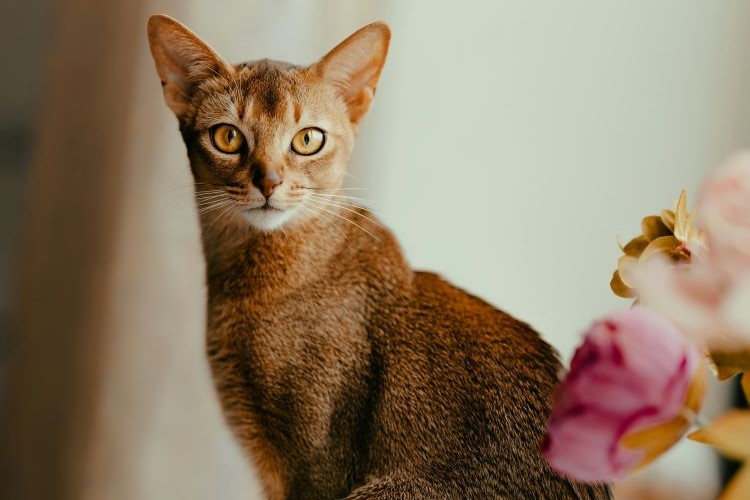
Their lithe physiques, gorgeous coloring, and faces full of curiosity make the Abyssinian cat breed one of the most distinct. They’re reminiscent of wildcats — and often act like them, too, with a penchant for hunting around the backyard or pouncing on a toy during a game of cat and mouse. As one of the most energetic, athletic, and inquisitive of breeds, the Abyssinian (familiarly called Aby) can bring a lot of life and love into any household.
Whether you’re simply curious about the breed or are about to welcome an Aby into your home, learn all about these cute kitties and how to give them a long and healthy life.
5 interesting facts about Abyssinian cats
- In 2007, an Abyssinian named Cinnamon helped scientists complete sequencing of the feline genome, which may contribute to greater insights into certain feline and human disorders.
- Abys shed less than other cat breeds and produce lower levels of Fel d1, the primary allergen on cats. For pet parents with sensitivities to cat hair, an Abyssinian could be a great companion!
- Nearly all modern blue Abys can be traced back to one cat Raby Ashanto, born in 1942, who carried the blue gene.
- Sometimes affectionately called “Aby-silly-ans,” Abys love to clown around, entertain their cat siblings, and even play fetch with their pet parents.
- An Abyssinian cat named Zula secured first place in the first-ever cat show, which took place in England in 1871.
Abyssinian cat breed description
Abyssinians’ unique markings are reminiscent of wildcats: Each individual hair on an Aby’s coat has banded ticking, lending more depth to their coat. But their physique also contributes to their wild flair, with lithe, strong, and slender bodies, always looking like they’re ready to pounce. The following are characteristics that most Abys share:
- Weight: 6–12 pounds (2.7–5.4 kg)
- Height: 12–16 inches (30 cm–40 cm)
- Build: Medium-sized; slim yet sturdy, with long legs, a long tail, and an arched neck
- Coat: Dense, short coat that has an almost iridescent quality due to the banded ticking
- Standard colorings: Ruddy (red-brown), red (cinnamon/copper), blue, fawn (rosy beige), and silver
- Life expectancy: Up to 15 years
Similar cat breeds
- Somali
- Ocicat
- Oriental Shorthair
- Bengal
History of the Abyssinian cat
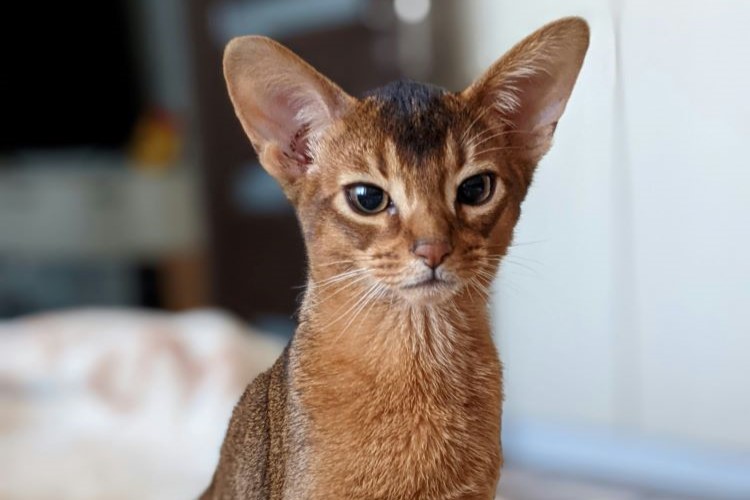
The origins of the Abyssinian breed are a mystery, but one thing that most sources agree on is that these felines likely served as companions to people living in ancient Egypt. Although there doesn’t seem to be a precise history or origin story for the Aby, many scholars believe that recent discoveries of mummified cats from Egyptian tombs resemble the breed. Additionally, paintings, artifacts, and other artwork from ancient Egyptian times show cat breeds that look a lot like the Abyssinian, with their thin bodies, sleek coats, prominent ears, and long tail ticked with dark markings. However, some recent genetic studies lead researchers to believe that the breed originated in Southeast Asia near the Indian Ocean.
Despite its shrouded history, the Aby is commonly referred to as one of the oldest cat breeds. In slightly more recent years (well, recent compared to ancient Egypt), Abyssinians have entered the cat fanciers’ scene, with their first-known appearance in England at the first-ever cat show in 1871: the Crystal Palace Show. The Aby cat, named Zula, won third prize.
Not too long after, in 1906, the breed was officially recognized by The Cat Fanciers’ Association. Abyssinians gained popularity in North America when the first cats were brought over from England in the early to mid-1900s.
What to expect when you bring an Abyssinian home
What is the Abyssinian cat breed really like? Learn more about their personality, energy levels, ideal environments, and grooming needs.
Abyssinian cat personality
Playful, inquisitive, and extremely intelligent, Abyssinians are often described as the dogs of the cat world, preferring social companionship (aka following their humans around like puppy dogs), interactive games, and a whole lot of exploration.
Their curiosity can get them into mischief but, most of the time, leads to the cutest antics. Some pet parents call them “Aby-silly-ans” and for good reason. Even though these clowns of the cat kingdom are always down to explore, they’re quite affectionate and crave a loving and attentive family. Abys might not settle in your lap for hours on end, but they’ll let you know when they want a good cuddle.
Energy and mental enrichment needs
Known for their high levels of energy, incredible intelligence, and nearly insatiable curiosity, Abyssinians do well in active households where their needs for mental and physical enrichment can be met. They can play on their own with the right toys, but due to their social nature, Abys thrive when they have dedicated interaction with another cat sibling or pet parent.
Here are some ideas for activities and toys for Abys:
- Set up a cat tower — because Abys love reaching great heights.
- Provide them with puzzle feeders.
- Use cat teasers and wand toys during playtime.
- Play fetch with a lightweight toy.
- Create hiding spots (with cardboard boxes or other items) and tunnels.
- Hide treats around the house for them to find, putting their hunting instincts to good use.
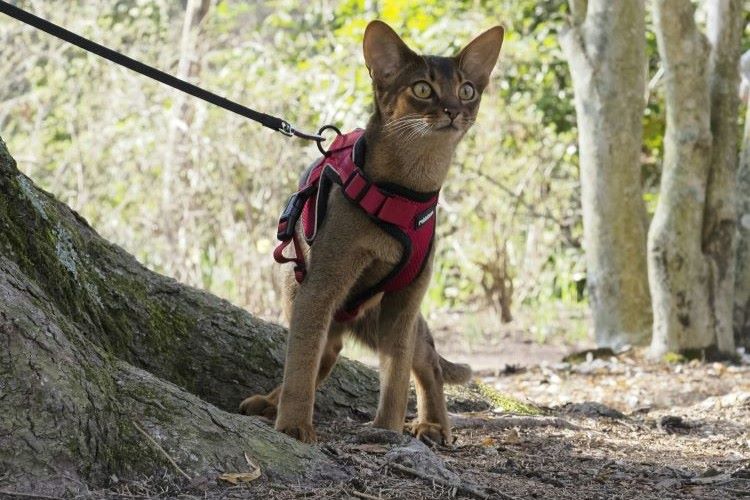
- Train them on how to wear and walk with a harness so that you can take them outdoors and let them explore while supervised.
- Let them play with a large bowl of water or even a hose outside!
- Rotate their toys routinely to prevent them from getting bored.
- Introduce them to new scented and textured cat toys to keep things interesting.
Indoor vs. outdoor
With an appetite for adventure, it’s not uncommon for Abyssinians to lunge for an open door, leading many pet parents to wonder if indoor vs. outdoor is better for their Aby. The reality is that while these cats are athletic and like changes in environments, they can be happy as apartment dwellers just so long as the right toys and play opportunities are provided. But larger homes or those with enclosed yards are ideal for this breed to give them enough space to explore.
If you don’t have a yard, it is important to give your Aby a taste of the outdoors, either with a small catio or an enclosed cat run that you can set up, say, at an apartment complex’s outdoor common area. Abyssinians are highly trainable, so another great idea is to put on their harness and take them to a safe outdoor area where they can explore from a leashed distance.
Abyssinian cat grooming needs
The Abyssinian cat breed is low maintenance when it comes to grooming due to their short coats and low shedding. It’s still necessary to comb their fur routinely to keep it healthy. Other grooming needs include brushing their teeth and checking their ears for any sign of infection.
Are Abyssinians healthy cats?
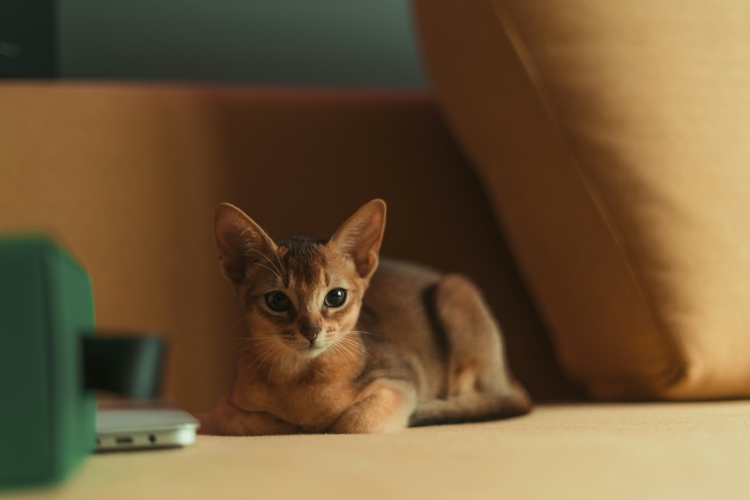
Overall, Abyssinians are a healthy breed. With the right amounts of exercise and mental stimulation, paired with a healthy diet, tender love and care, your Aby can live a long and happy life. That said, the breed is predisposed to certain health conditions:
- Pyruvate kinase deficiency: This is a hereditary disease that can lead to anemia. The CFA notes that thanks to genetic testing, breeders are now better able to remove carriers of the inherited gene from breeding pools.
- Osmotic fragility of erythrocytes: This is a unique type of anemia caused by severely fragile red blood cells.
- Feline infectious peritonitis (FIP): Abyssinians and other purebred cats are considered at higher risk of developing FIP, which stems from a mutated feline coronavirus.
- Patellar luxation: Most common in Abyssinian, Siamese, and Devon Rex breeds, patellar luxation happens when the kneecap becomes dislocated. Very mild cases may require no treatment, but some cats may need rest, anti-inflammatory drugs, or even surgery for severe cases.
- Renal amyloidosis: A rare condition, renal amyloidosis involves the kidneys being unable to do their job correctly, leading to a cat’s inability to filter wastes from the blood. According to the Cornell Feline Health Center, this issue almost always occurs in Abyssinian cats.
- Progressive retinal atrophy: This is a genetic predisposition for many breeds, including Abys. A gene mutation can lead to blindness, which, in affected cats, typically shows signs at 1 or 2 years of age and fully develops by ages 3 to 5. Testing can be done to find out if a cat is affected by or a carrier of the gene.
Just because Abys may be prone to certain health issues doesn’t mean that your cat will develop them. It’s a good idea to be aware of these medical conditions so that you can ensure that your kitty receives routine checkups. Having cat insurance can further protect your cute companion and help them get any treatments they need.
Abyssinians in pop culture
Not only does this sleek kitty capture the hearts of cat enthusiasts everywhere, but the Abyssinian cat breed also claims a corner of the internet, with its own TikTok channel featuring all their adorable antics and incredible intellect.
Outside of social media, this cat breed has also made its claim to fame in Hollywood. The protagonist of the Disney movie The Cat from Outer Space (1978) is an extraterrestrial Abyssinian cat named Jake, who was played by twin Abyssinians named Rumple and Amber.
Well-known people have also owned Abys. For instance, political commentator Rush Limbaugh had an Aby named Punkin (feel free to claim dibs on that cute name for a future feline family member!).
Pet Parenting is the official dog and cat blog of Trupanion, a leader in the world of pet insurance. Here you’ll find useful dog and cat care tips, important veterinary insights, and an abundance of pet lifestyle topics. All of our articles are written by real humans with a love for pets, not AI. However, please note that the views expressed here are those of the individual authors and do not necessarily reflect those of Trupanion. Articles are reviewed by veterinarians for accuracy, but they are not a substitute for professional diagnosis and treatment. Always consult with your own pet’s veterinarian for advice.